
KEY ELEMENTS


Design Goal
Roomba Racer was created as a stylized exploration-focused racing prototype set inside an oversized household environment.
Inspired by miniature-world stories like The Borrowers and arcade traversal games such as Tony Hawk’s Pro Skater,
The project was developed within half a semester as part of a university prototype assignment focused on creating a polished and playable gameplay experience.
Focus Areas
exploration-focused racing
traversal readability
oversized environmental storytelling
arcade-inspired movement flow
playful toy-scale worldbuilding
stylized environment design

Design Exlporation
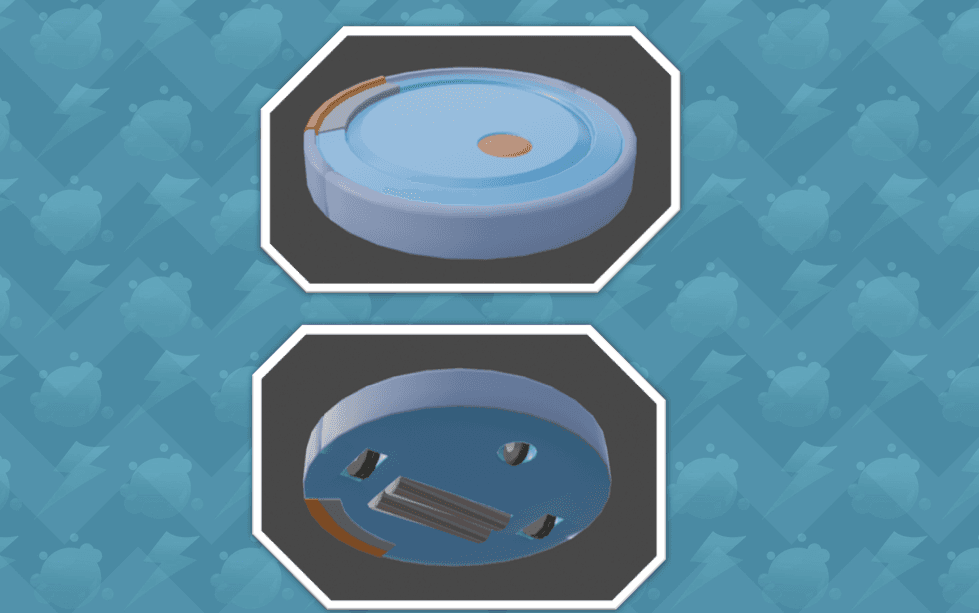
Modular Vehicle Design
Explored interchangeable Roomba components and variations while adapting the vehicle structure for gameplay-oriented movement and readability.

Environment Design
Household objects, furniture, and toys were designed around oversized proportions to create readable traversal spaces and exploration-focused gameplay routes.

Modular Track System
Created a spline-based modular track setup with adjustable rotation and elevation to quickly build traversable arcade-style racing paths throughout the environment.


Challenge:
Early spline tracks produced unstable entry and exit angles
Curved sections created wobbling and inconsistent traversal behavior
Solution:
Refined spline handling and rotation behavior through Blueprint adjustments
Increased topology density to improve curve smoothness and traversal readability
Iterated on modular track pieces to support cleaner arcade-style movement
Large-Scale Asset Optimization
Challenge:
Oversized environment assets caused aggressive LOD transitions and lighting artifacts
Some objects appeared overly simplified or produced incorrect shadow behavior
Solution:
Adjusted LOD behavior on important gameplay objects
Optimized lighting and shadow baking settings
